
产品和服务 / 产品类型 / 细胞系&裂解液 / KO细胞系

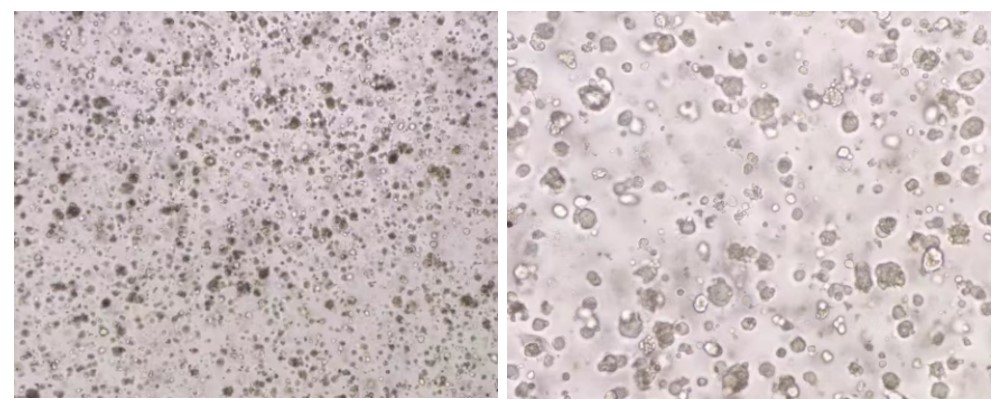
Human gastric cancer organoid were cultured with EGF(Cat. RP03287), NOG(Cat. RP01237), FGF10(Cat. RP01140), RSPO1(Cat. RP00071), Wnt-3a Surrogate(Cat. RP01618SLQ), A83-01(Cat. RPM0008), Y-27632 dihydrochloride(Cat.RPM0007), Gastrin Ⅰ(Cat. RPM0011), AB-27 Supplement(Cat. RPM0047LQ), N-2 Supplement(Cat. RPM0046LQ).

Human stomach organoids were cultured with EGF(Cat. RP03287), FGF10(Cat. RP01140), NOG(Cat. RP01237), RSPO1(Cat. RP00071), WNT-3a(Cat. RP01618SLQ).

Human liver organoids were cultured with EGF(Cat. RP03287), HGF(Cat. RP01602), FGF2(Cat. RP01042), FGF10(Cat. RP01140), NOG(Cat. RP01237), RSPO1(Cat. RP00071), WNT-3a(Cat. RP01618SLQ).

Recombinant Human Noggin/NOG Protein was determined by SDS-PAGE under reducing conditions with Coomassie Blue.

Human colorectal cancer organoid were cultured with EGF(Cat. RP03287), NOG(Cat. RP01237), FGF10(Cat. RP01140), RSPO1(Cat. RP00071), HGF(Cat. RP01602), A83-01(Cat. RPM0008), SB202190(Cat. RPM0010), Y-27632 dihydrochloride(Cat. RPM0007), Acetylcysteine/NAC(Cat. RPM0017), Nicotinamide (Cat. RPM0016), Gastrin Ⅰ(Cat. RPM0011), AB-27 Supplement(Cat. RPM0047LQ).

Immobilized recombinant Human BMP2 at 1 μg/mL (100 μL/well) can bind Noggin with a linear range of 2-57 ng/mL.

Mouse lung organoids were cultured in Matrigel (Cat. RPM0003) with medium supplemented with EGF (Cat. RP03287), Noggin (Cat. RP01237), RSPO1 (Cat. RP00071), Wnt-3a (Cat. RP01618SLQ), and FGF-10 (Cat. RP01140). After 8 days of culture, the expression of lineage markers, including E-Cadherin (Cat. A20798), AQP5 (Cat. A23292), and CD49F (Cat. A26707), was assessed by ultra-plex immunofluorescence staining.

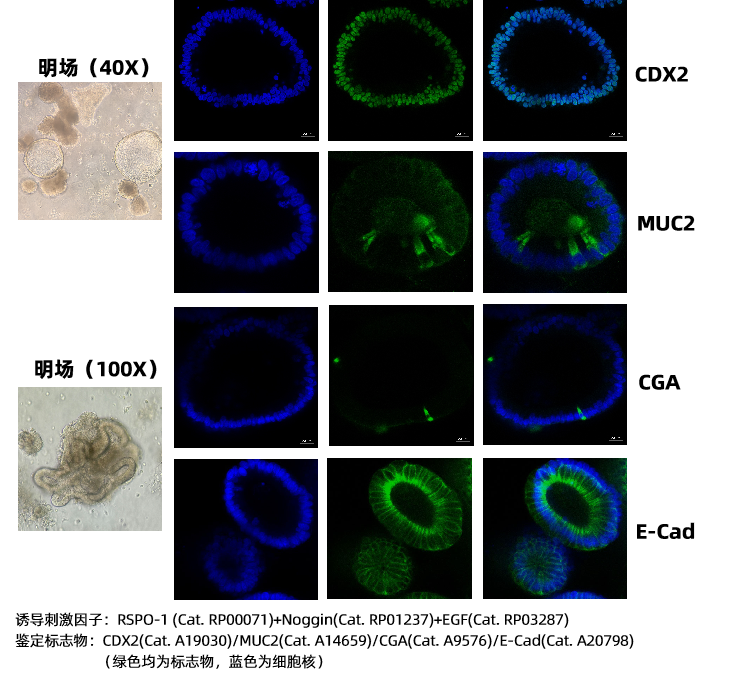
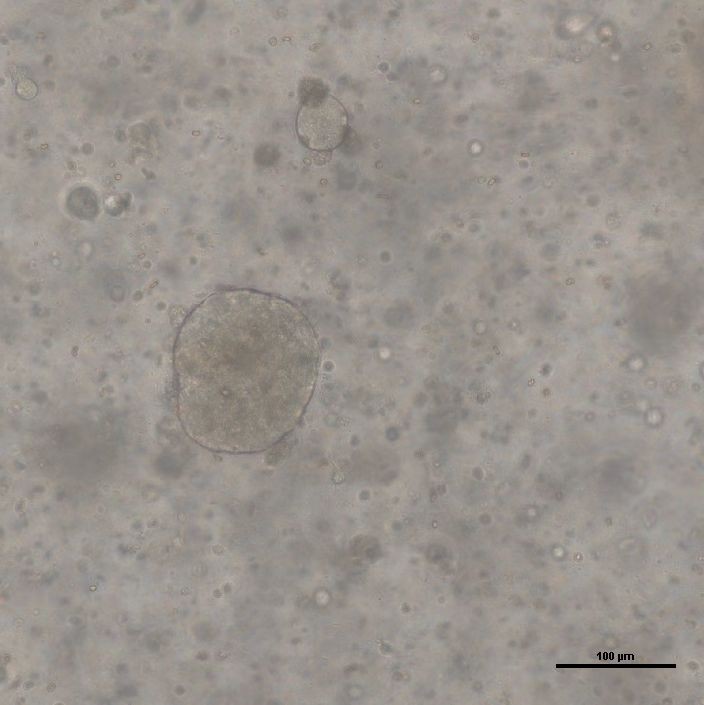
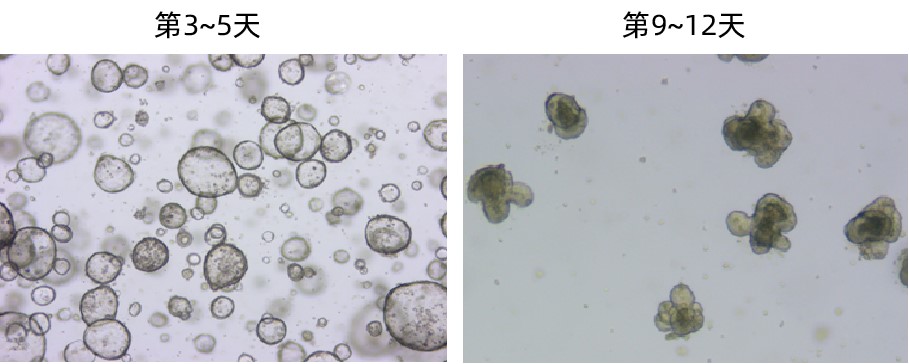
Mouse small intestinal organoids were cultured with EGF(Cat. RP03287), NOG(Cat. RP01237), RSPO1(Cat. RP00071).

Immobilized recombinant Human BMP4 at 0.5 μg/mL (100 μL/well) can bind Noggin with a linear range of 4-47 ng/mL.

Measured by its ability to inhibit BMP-4-induced alkaline phosphatase production by ATDC5 mouse chondrogenic cells. The ED50 for this effect is 13.28-53.12 ng/mL in the presence of 50 ng/mL of recombinant human BMP-4, corresponding to a specific activity of 1.88×10⁴-7.53×10⁴ units/mg.

Mouse large intestinal organoids were cultured with EGF(Cat. RP03287), NOG(Cat. RP01237), RSPO1(Cat. RP00071), WNT-3a(Cat. RP01618SLQ)

Human kidney organoids were cultured with EGF(Cat. RP03287), FGF2(Cat. RP01042), FGF7(Cat. RP01717), FGF9(Cat. RP01710), FGF10(Cat. RP01140), IGF-(Cat. RP00996), NOG(Cat. RP01237), RSPO1(Cat. RP00071), WNT-3a(Cat. RP01618SLQ). And further, DKK-1(RP01343) was used to induce the establishment of cell polarity.

Immobilized Human Noggin at 1 μg/mL (100 μL/well) can bind Noggin Rabbit pAb with a linear range of 1-3.5 ng/mL.


By diffusing through extracellular matrices more efficiently than members of the TGF-beta superfamily, this protein may have a principal role in creating morphogenic gradients. The protein appears to have pleiotropic effect, both early in development as well as in later stages. It was originally isolated from Xenopus based on its ability to restore normal dorsal-ventral body axis in embryos that had been artificially ventralized by UV treatment. The results of the mouse knockout of the ortholog suggest that it is involved in numerous developmental processes, such as neural tube fusion and joint formation. Recently, several dominant human NOG mutations in unrelated families with proximal symphalangism (SYM1) and multiple synostoses syndrome (SYNS1) were identified; both SYM1 and SYNS1 have multiple joint fusion as their principal feature, and map to the same region (17q22) as this gene. All of these mutations altered evolutionarily conserved amino acid residues. The amino acid sequence of this human gene is highly homologous to that of Xenopus, rat and mouse.