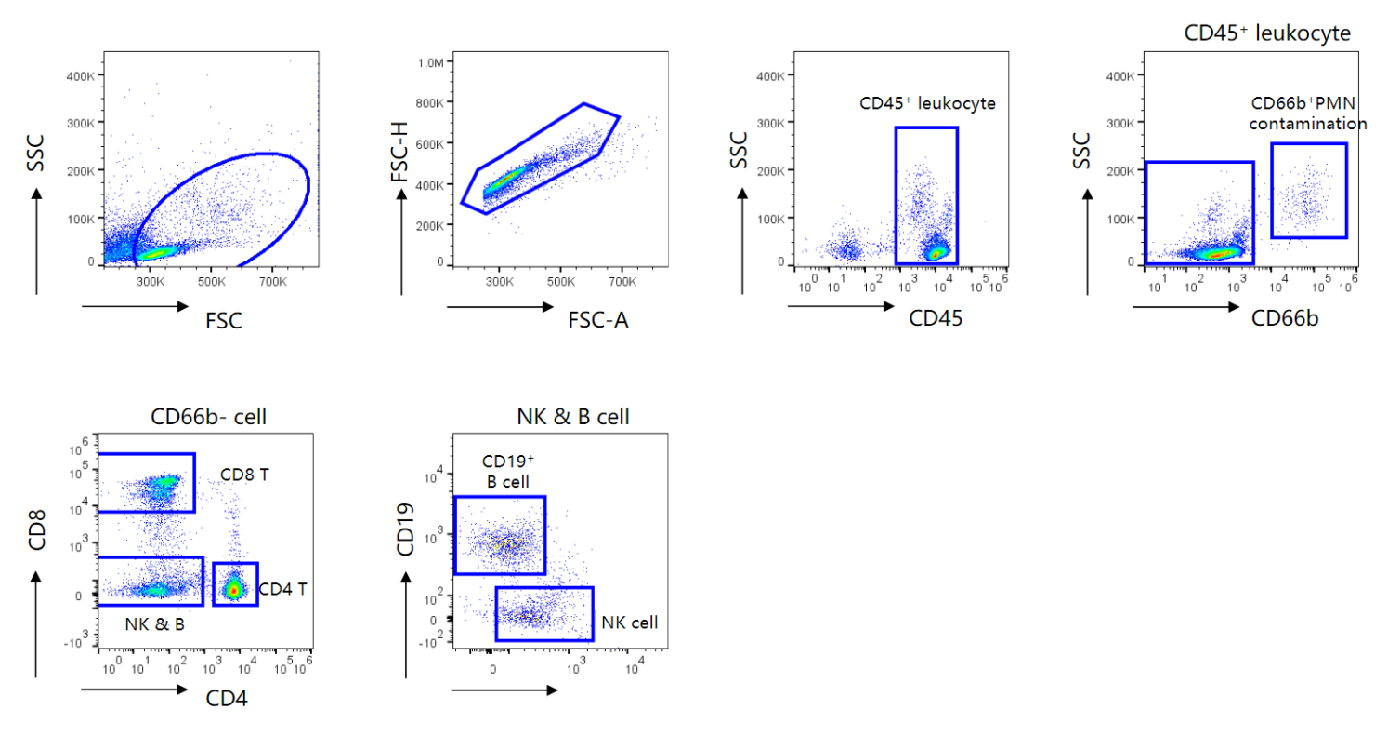
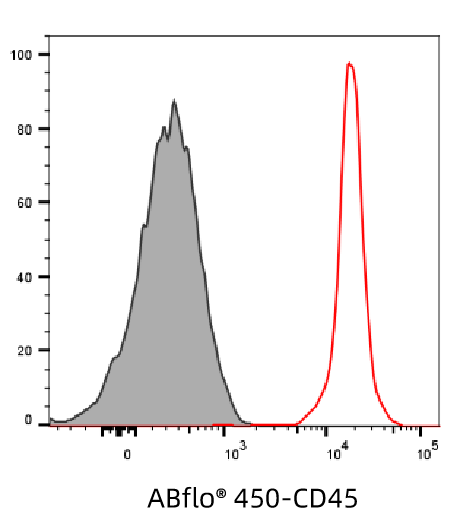
Flow Cytometry analysis of human PBMCs, using ABflo® 450 Rabbit anti-Human/Monkey CD45 mAb (A25195), APC Rabbit anti-Human CD66b mAb (A26616), ABflo® 488 Rabbit anti-Human CD4 mAb (A26597), PE/Cyanine7 Rabbit anti-Human/Monkey CD8a mAb (A27308) and ABflo® 700 Rabbit anti-Human/Monkey CD19 mAb (A27165). The staining clearly distinguished between positive and negative cell populations.
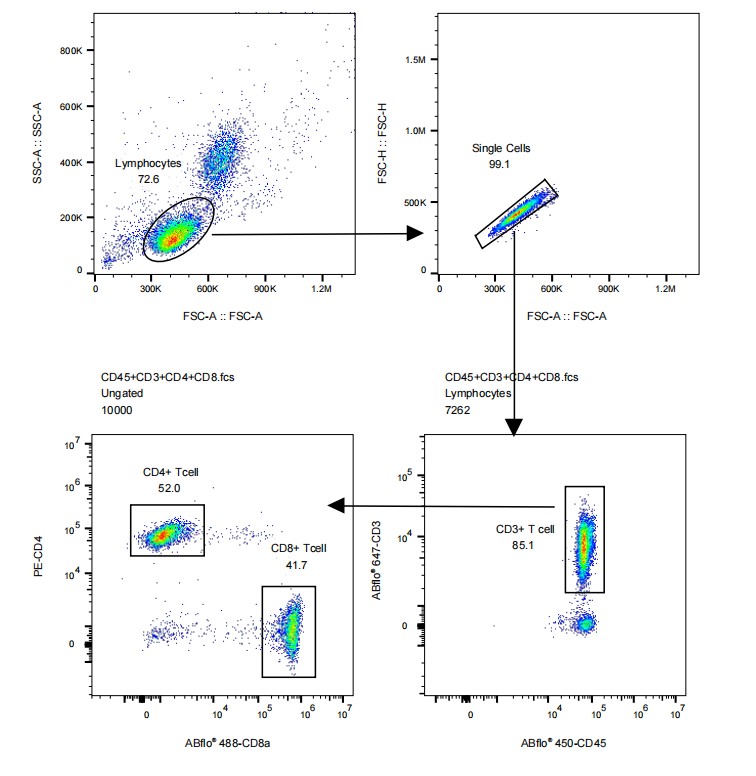
Flow cytometry analysis of human PBMC using PE Rabbit anti-Human CD4 mAb (A26596) , ABflo® 450 Rabbit anti-Human CD45 mAb (A25195), ABflo® 488 Rabbit anti-Human/Monkey CD8a mAb (A23345) and ABflo® 647 Rabbit anti-Human CD3 mAb (A26284) clearly classified positive and negative cells.
The protein encoded by this gene is a member of the protein tyrosine phosphatase (PTP) family. PTPs are known to be signaling molecules that regulate a variety of cellular processes including cell growth, differentiation, mitosis, and oncogenic transformation. This PTP contains an extracellular domain, a single transmembrane segment and two tandem intracytoplasmic catalytic domains, and thus is classified as a receptor type PTP. This PTP has been shown to be an essential regulator of T- and B-cell antigen receptor signaling. It functions through either direct interaction with components of the antigen receptor complexes, or by activating various Src family kinases required for the antigen receptor signaling. This PTP also suppresses JAK kinases, and thus functions as a regulator of cytokine receptor signaling. Alternatively spliced transcripts variants of this gene, which encode distinct isoforms, have been reported.